





 All Gels
 1-Phase Gels
 Bonding Gels
 Builder Gels
 Finish Gels
 Fiberglass Gels
 French Gels
 Make-up/Camouflage
 Color Gels
 Effect Gels
 All Acrylics
 Acrylic Powder
 Polyacrylic Gels
 Acrylic Liquids
 Acrylic Accessories
 All Nail Polishes
 Nail Polish
 Shellac
 Stamping Polish
 All Liquids
 Cleaner
 Primer & Nail Prep
 Antifungal
 No Lines
 Remover
 All Nail Art
 Rhinestones, Effects & Pigments
 One Stroke & Stamping
 Stickers & Nail Foils
 All Products
 Creams
 Nail Oils
 Hygiene & Disinfection
 UV/LED Lamps & Desk Lamps
 Nail Drills & Bits
 Files & Buffers
 Brushes
 Tools
 Empty Containers
 Display & Storage
 Nail Extension / Repair
 Sets
Which nail file is best for me? Beginners ask this just as often as experienced nail technicians – because the right file decides whether you work gently and precisely or put unnecessary strain on the natural nail. In this guide you'll learn how straight, banana and Salino files differ, what the grit numbers mean and which file to use for what.
Grit: what do the numbers on the file mean?
Numbers such as 100/180 indicate the grit of the two sides of the file. The rule is: the lower the number, the coarser the file – and the more material it removes.
- 80: very coarse. Only for shortening and removing artificial nails (gel, acrylic, tips). Never use on natural nails.
- 100: coarse. For shaping and removing gel and acrylic enhancements, for example during infills.
- 150: medium. For finer shaping of enhancements and blending.
- 180: medium-fine. For smoothing enhancements and – with gentle pressure – shaping natural nails.
- 240 and finer: fine. For buffing, smoothing and preparing the nail surface, typically in the form of buffers.
Rule of thumb: for natural nails use a grit of 180 or higher; for gel and acrylic it can be coarser.
Straight file: the all-rounder
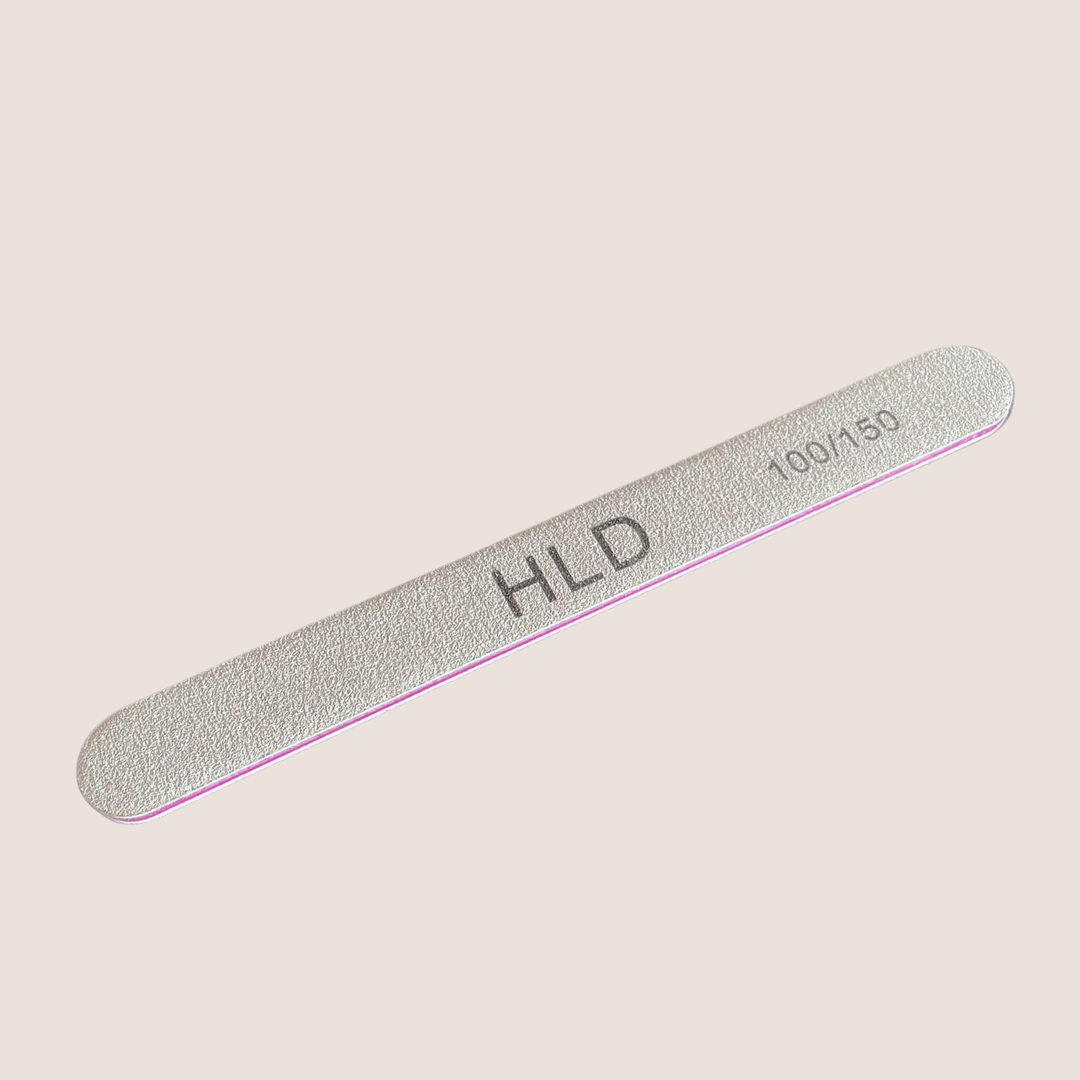
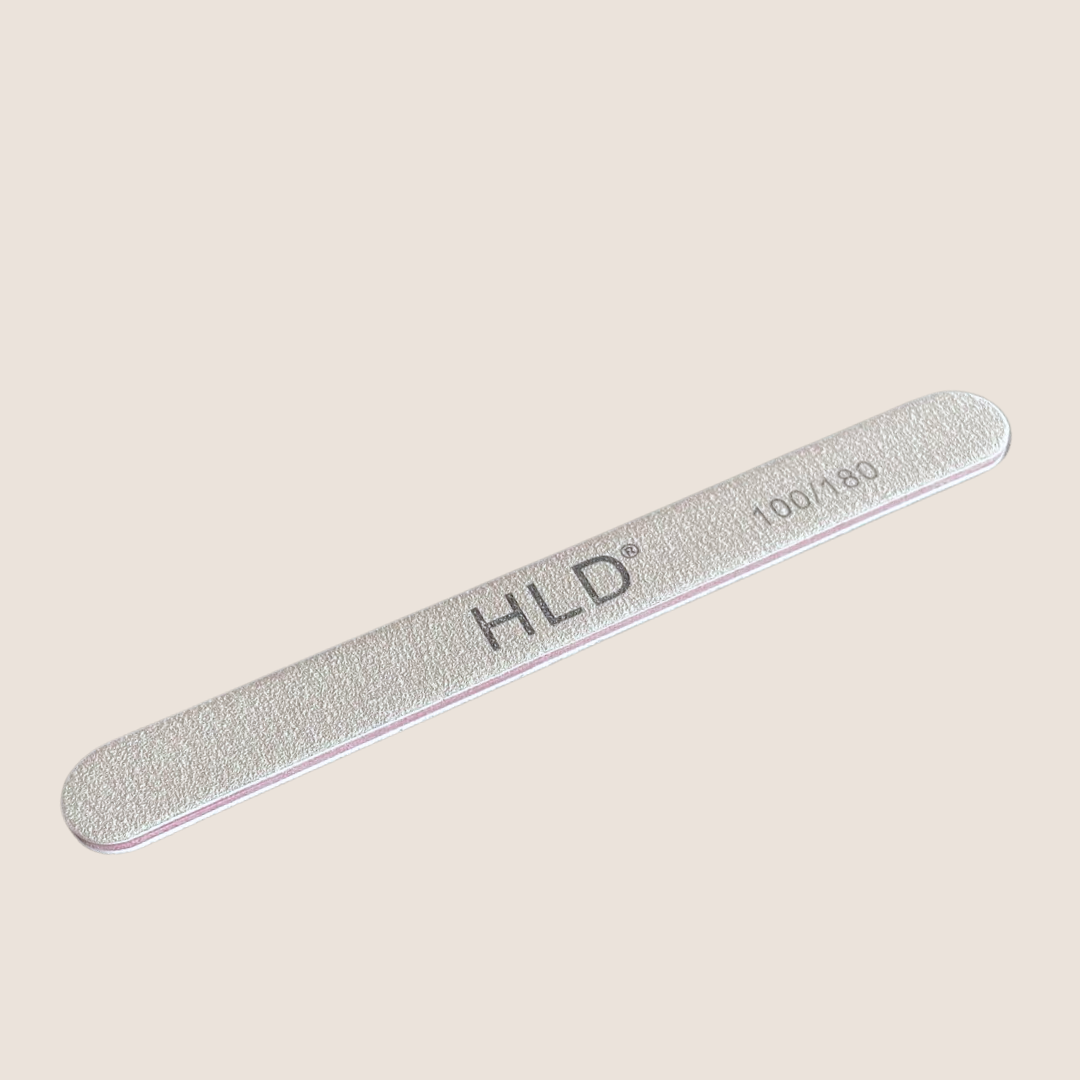
The straight file is the classic shape in the nail salon. Use it to file straight edges, shorten the length evenly and shape the free edge precisely. The BNC LUX straight professional file Zebra with red core is available in 80/100 and 100/180 grit. According to the description, its grit and shape allow precise work even close to the nail bed, and the abrasive paper is particularly hard-wearing. An alternative is the BNC HLD straight file Zebra in 100/150 or 100/180.
Banana file: for sides and curves
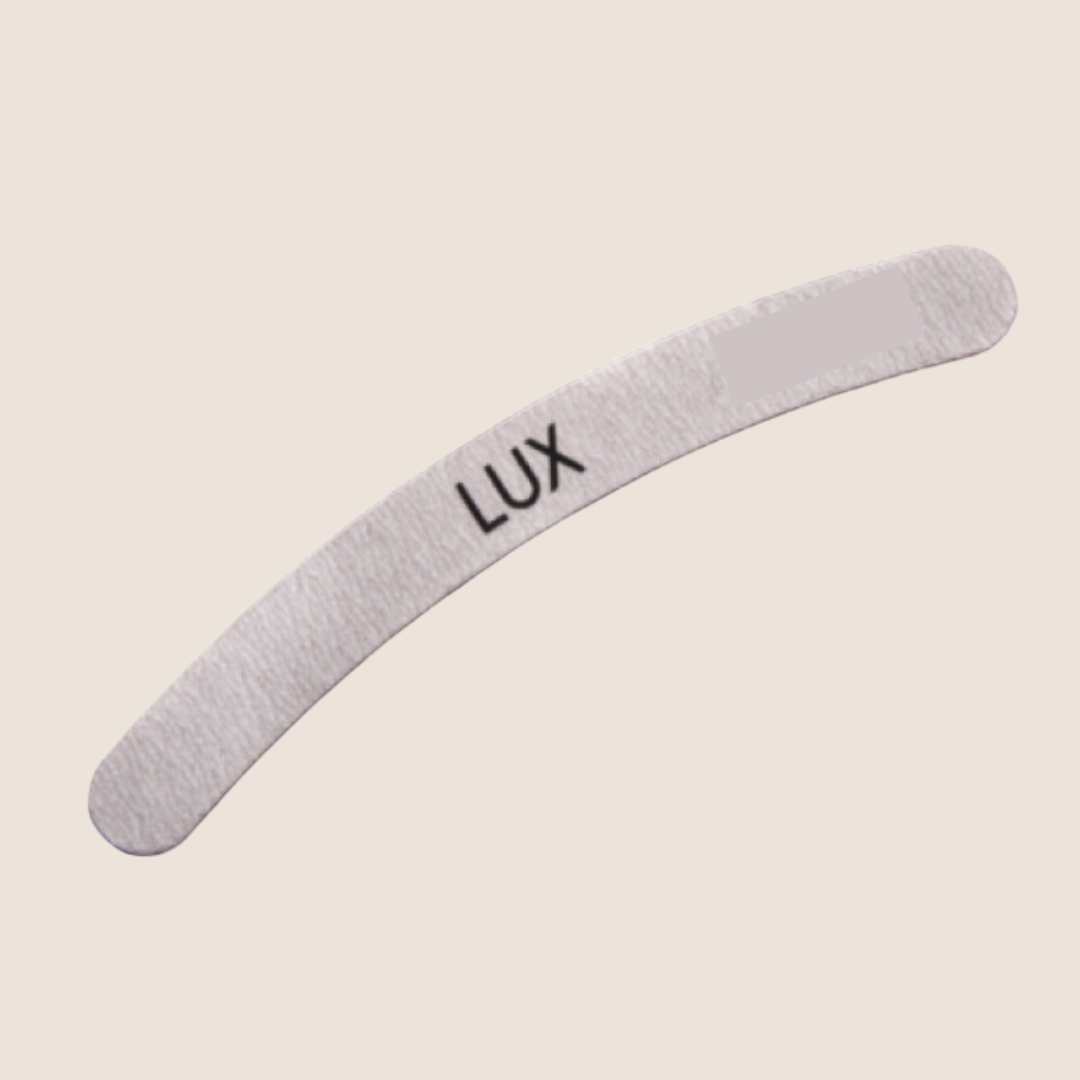
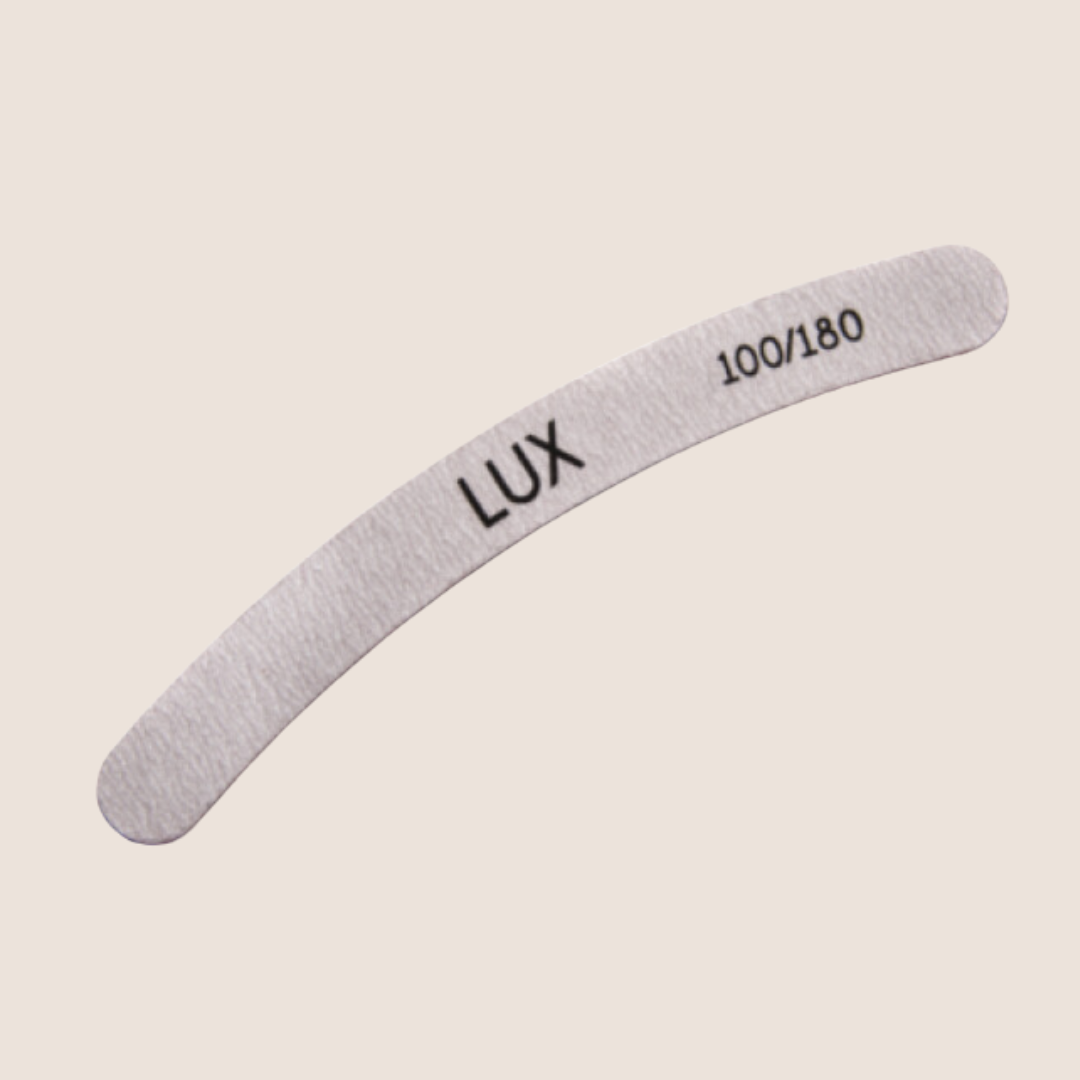
The banana file is slightly curved. Thanks to the curve you can easily reach the side areas and curves, for example when shaping the side lines or working in hard-to-reach spots. The BNC LUX banana file Zebra with red core comes in 100/180 grit – coarse enough to shape enhancements and, on the 180 side, fine enough for smoothing.
Salino file: versatile with three grit options
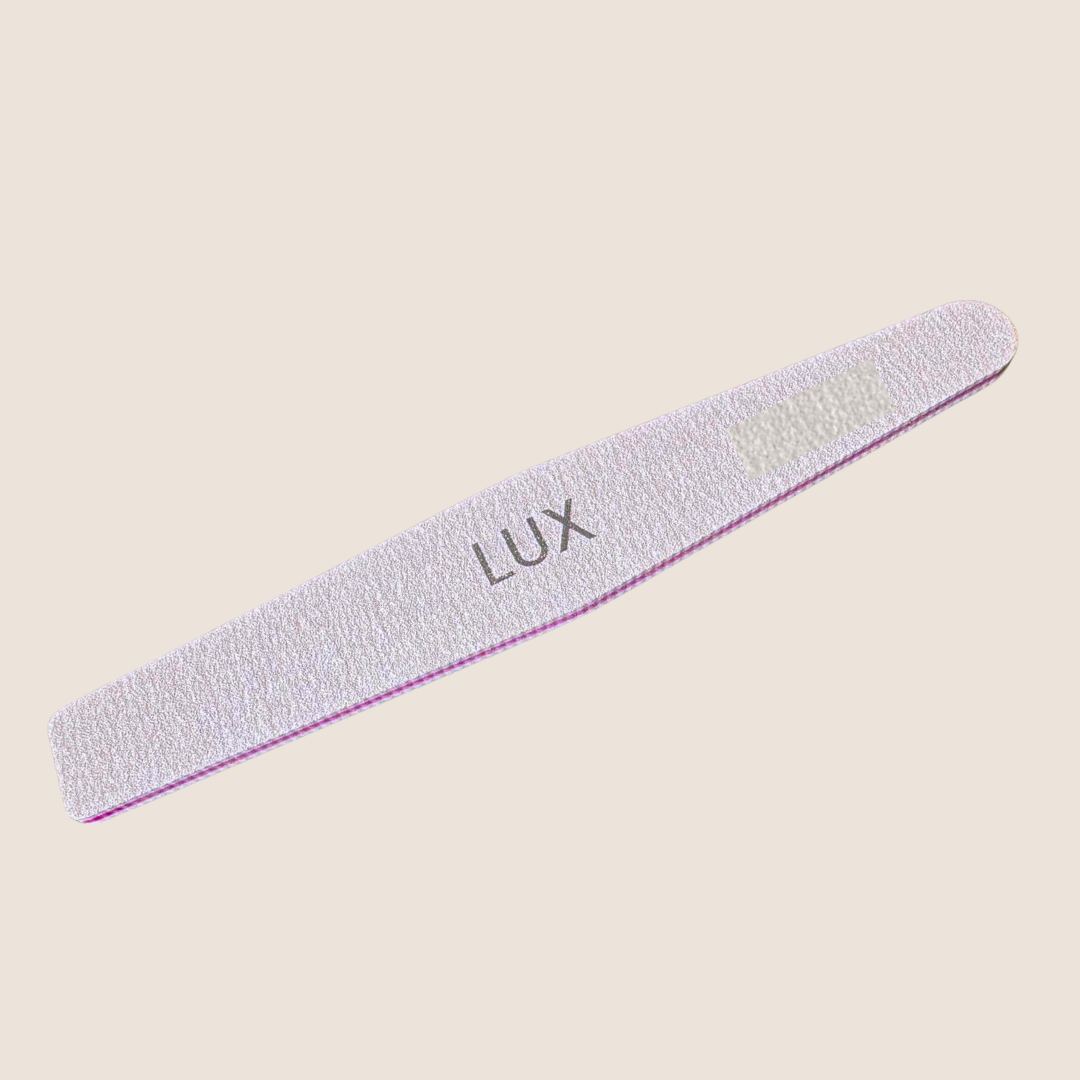
The Salino file is a flat file with two sides of different grit. The coarse side removes layers of gel, the finer side smooths the surface. The BNC LUX Salino file Zebra has a sturdy red core and is available in 100/100, 100/150 and 100/180 – so you'll find the right version for every step.
Half-moon buffers and buffers: for the finish
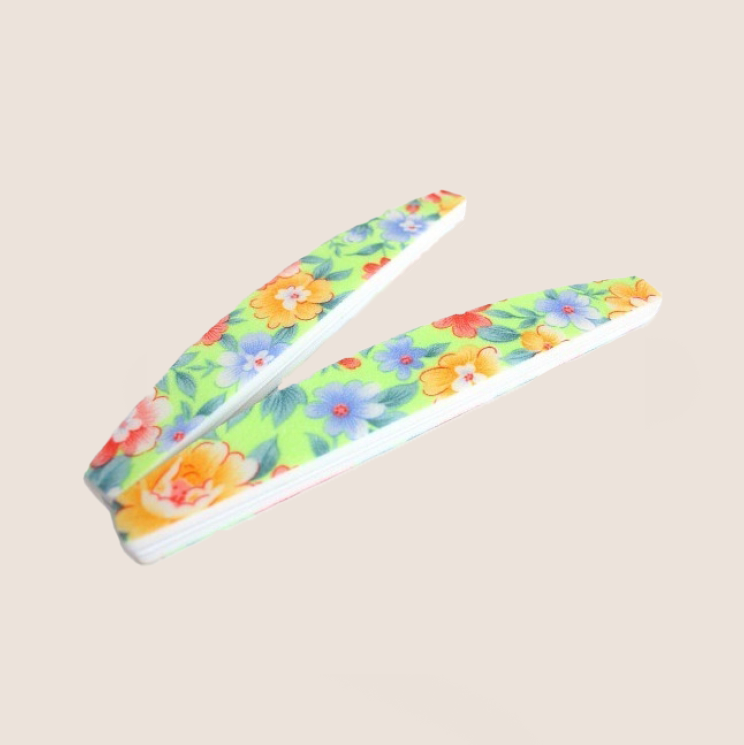
Buffers are soft blocks or files with a flexible core and fine grit. They are ideal for mattifying the natural nail before an enhancement and for smoothing. The BNC half-moon buffer file “Flower design” 180/240 is suitable for natural nails and enhancements and sits comfortably in the hand thanks to its half-moon shape. If you want to do several steps with one block, choose the 3-sided BNC buffer black/orange: coarse side for unevenness, 180 side for smoothing, third side for polishing.
Which file for what? The overview
You'll find the full range in the files & buffers category. If you remove a lot of material in the salon, you'll often also use an e-file – learn more in Nail drill bits explained and in the nail drills and bits category.
Tips for use: how to file properly
- File in one direction: Filing back and forth roughens the nail edge and can cause splitting. On natural nails, always move the file from the outside towards the centre.
- Choose the right grit: coarse for artificial nails, fine for natural nails and details.
- Work without pressure: Let the file do the work. Too much pressure creates heat and thins the natural nail.
- Clean your files: Brush off filing dust regularly. In the salon: files that can't be disinfected belong to one client only or are disposed of after the treatment.
- Replace them in time: A blunt file tears rather than files.
Fine grits are especially important when preparing the natural nail for gel – read more in The perfect base for gel nails. If your nails tend to split, our article Brittle nails will help.
💡 Pro tip for salons
Buy your standard files in bulk packs: the LUX files are also available in packs of 50, the HLD file in packs of 25. That way you can give every client her own file or let her take it home after the treatment – hygienic, and a nice touch she'll remember. Also set yourself a fixed filing sequence (e.g. 100 for shaping, 180 for smoothing, buffer for the finish) so you work faster and more consistently.
FAQ: Choosing the right nail file
Which grit is right for natural nails?
For natural nails, a grit of 180 or higher is suitable. Coarser files (80 or 100) are meant for gel, acrylic and tips.
What is the difference between a file and a buffer?
A file has a firm core and is mainly used for shortening and shaping. A buffer is softer, usually finer and is used to mattify and smooth the surface.
What do I need a banana file for?
Thanks to its curved shape, you can reach side areas and curves better than with a straight file – handy when shaping enhancements.
How often should I replace my file?
As soon as it noticeably removes less or is frayed. In the salon, each client gets her own file or a file that can be disinfected.
The right file for every nail
Straight file, banana file or buffer: in the BNC online shop you'll find nail cosmetics & nail salon supplies in professional quality – for home and for the salon.
Browse the shop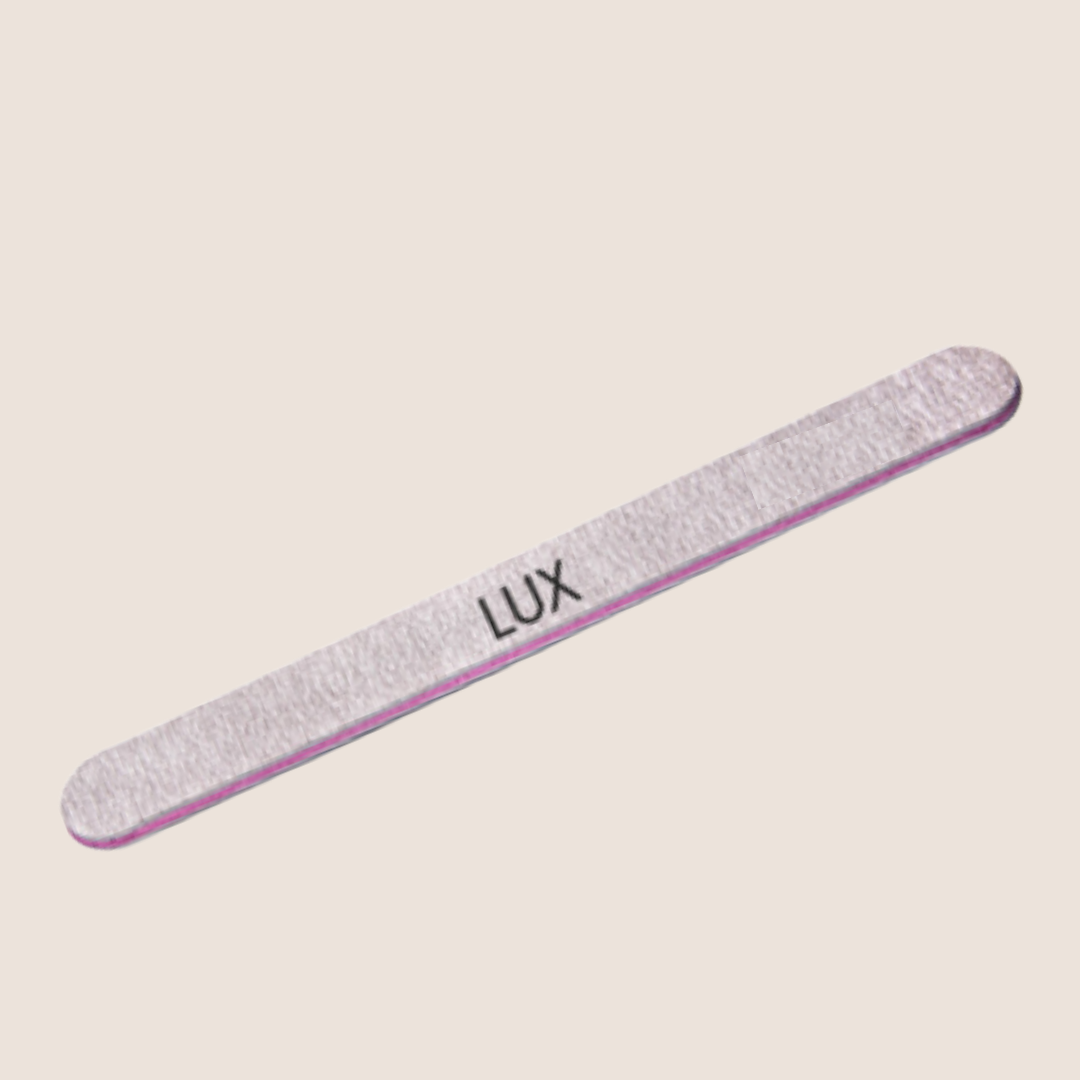


Leave a comment
This site is protected by hCaptcha and the hCaptcha Privacy Policy and Terms of Service apply.