





 All Gels
 1-Phase Gels
 Bonding Gels
 Builder Gels
 Finish Gels
 Fiberglass Gels
 French Gels
 Make-up/Camouflage
 Color Gels
 Effect Gels
 All Acrylics
 Acrylic Powder
 Polyacrylic Gels
 Acrylic Liquids
 Acrylic Accessories
 All Nail Polishes
 Nail Polish
 Shellac
 Stamping Polish
 All Liquids
 Cleaner
 Primer & Nail Prep
 Antifungal
 No Lines
 Remover
 All Nail Art
 Rhinestones, Effects & Pigments
 One Stroke & Stamping
 Stickers & Nail Foils
 All Products
 Creams
 Nail Oils
 Hygiene & Disinfection
 UV/LED Lamps & Desk Lamps
 Nail Drills & Bits
 Files & Buffers
 Brushes
 Tools
 Empty Containers
 Display & Storage
 Nail Extension / Repair
 Sets
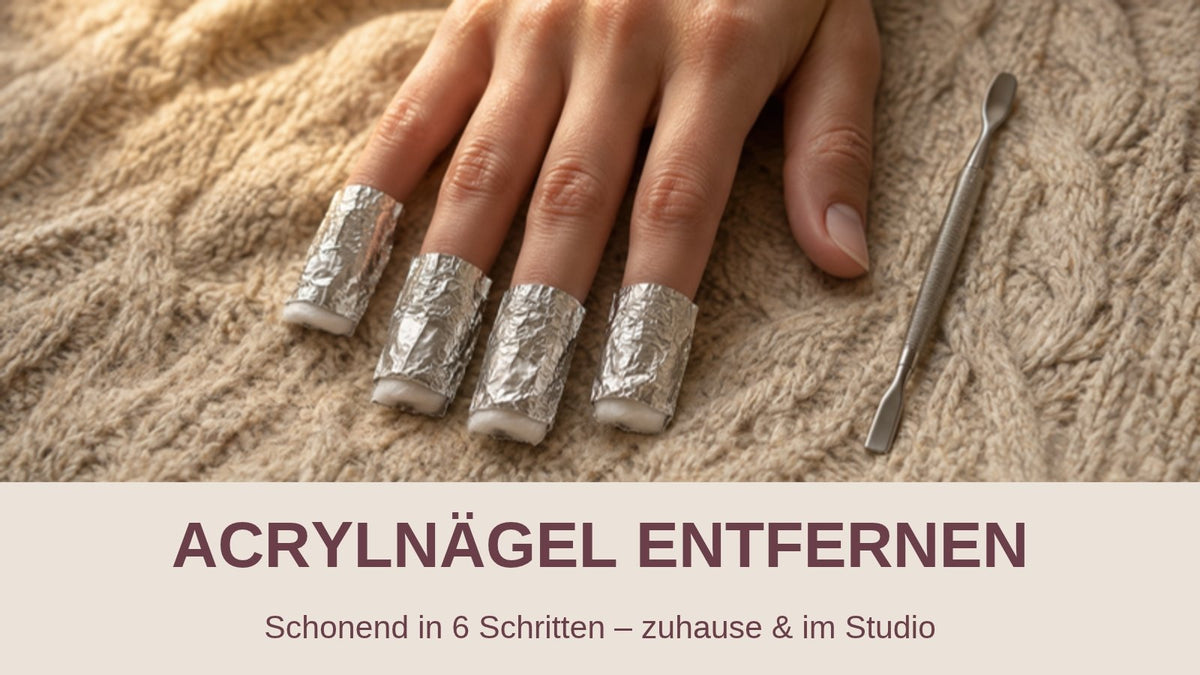
Removing acrylic nails gently works best when you take your time: file off most of the product first, then soften the rest with acetone and push it off carefully. In this guide we show you the 6 steps for doing it at home, the faster salon method with an e-file and the right care for your natural nails afterwards.
Why you should never rip off acrylic nails
Acrylic bonds firmly to the top layer of your natural nail. If you pick, pry or pull the enhancement off, you usually tear away thin layers of nail with it. The result: thin, bendy and sensitive nails that take weeks to grow out.
- Don't pry: Even if a side has already lifted – don't poke underneath it.
- Don't rush: Plan a second soaking round rather than scraping hard.
- Don't file down to the natural nail: The last thin layer of acrylic is dissolved by the acetone – not by the file.
What you need to remove acrylic
- BNC Acetone – according to the product description it removes shellac, gel polish and acrylic, available in 100 ml, 500 ml and 1000 ml
- BNC Zebra File 100/180 – the coarse 100 grit side for taking off product, the 180 grit side for shortening and shaping
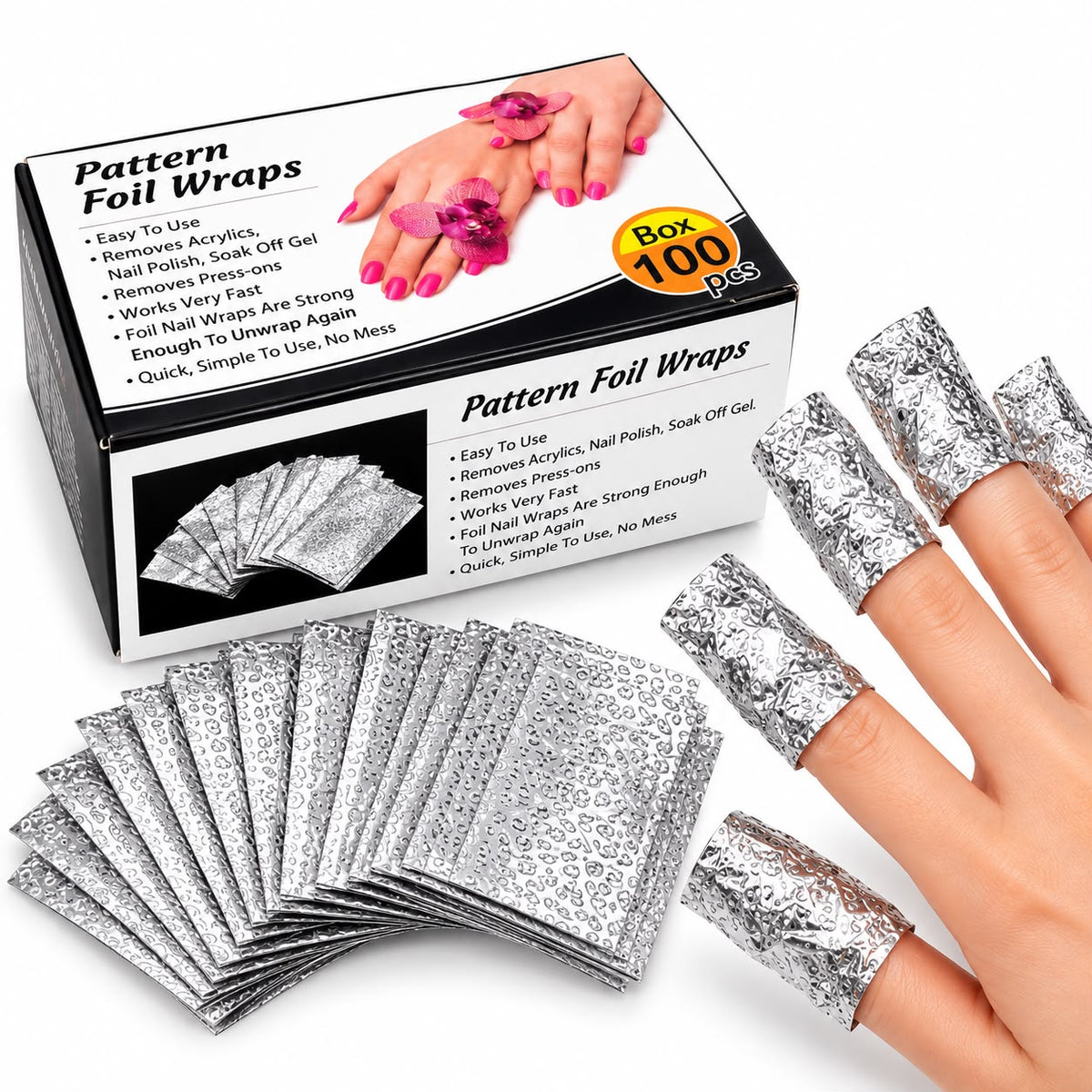
- BNC Remover Pads (remover wraps) – pad and foil in one, simply wrapped around the fingertip
- BNC Gel Spatula / Cuticle Pusher – for gently pushing off the softened acrylic
- BNC Buffer white 100/100 – very fine grit for the last residue and a smooth surface
- BNC lint-free nail wipes – lint-free for wiping away dust and acetone residue
- BNC Scented Nail Oil Almond Clear – for nails and cuticles after removal
- Optional for salons: BNC Ceramic Bit Cylinder Medium for your electric nail drill
You'll find everything for removal in the Cleaner & Acetone category and matching files under Files & Buffers.
Remove acrylic nails in 6 steps
1. Shorten and file off the acrylic
First cut the acrylic nails down to a short length. Then use the 100 grit side of the BNC Zebra File 100/180 to remove the shiny surface and most of the acrylic. Work evenly and with light pressure – leave a thin layer of acrylic so your natural nail stays untouched. Wipe away the dust with one of the BNC lint-free nail wipes.
2. Protect the skin around the nail
Acetone is very degreasing. So apply a little BNC Scented Nail Oil Almond Clear to the skin around the nail and to the cuticle – but not to the acrylic itself, otherwise the acetone can't work as well.
3. Apply acetone and wrap
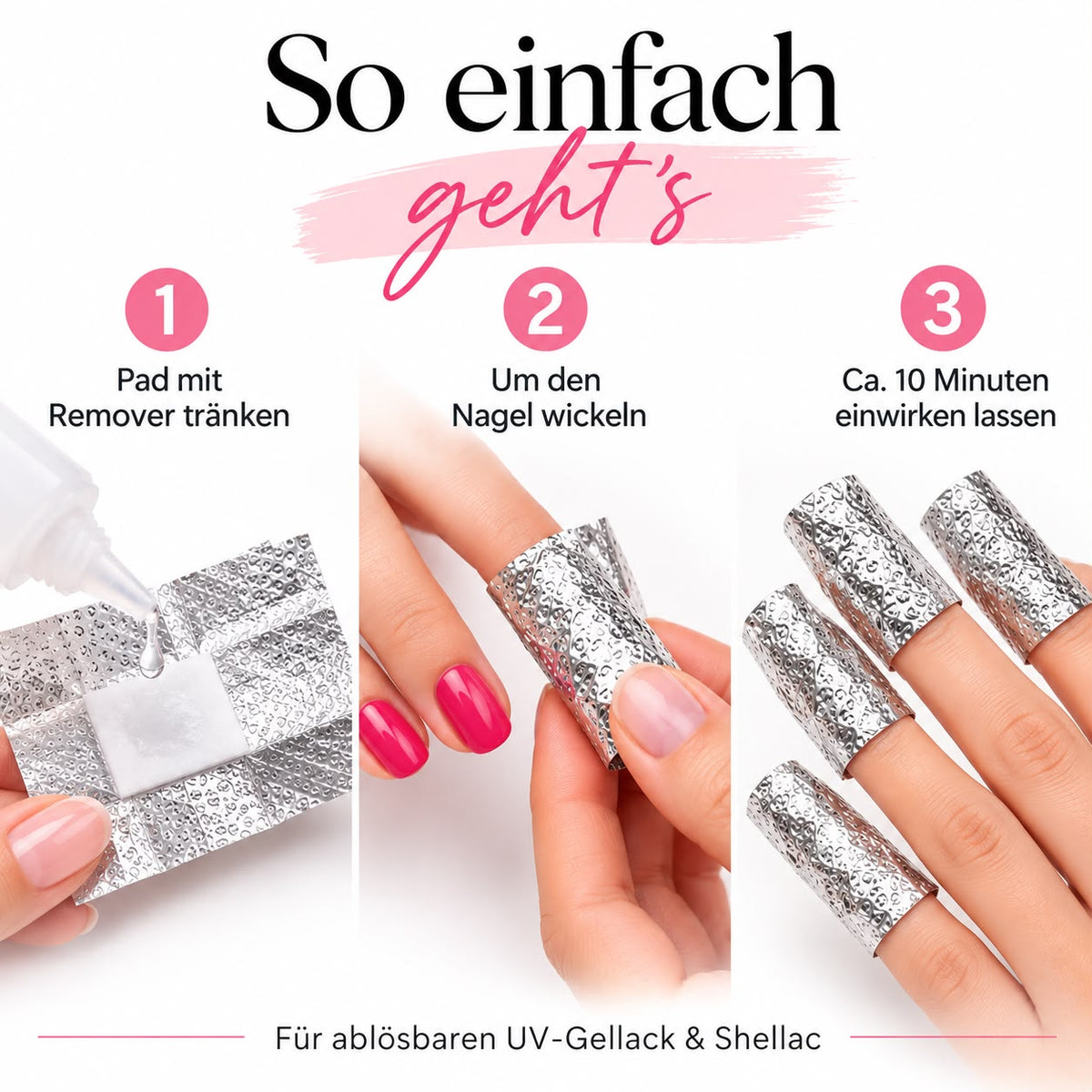
Soak the pad of the BNC Remover Pads (remover wraps) with BNC Acetone, place it on the nail and wrap the foil tightly around the fingertip. Cotton pads with aluminium foil work too. Make sure you have fresh air and keep the bottle away from heat and open flames.
4. Let it soak
Let the acetone work until the acrylic is soft and slightly rubbery. How long that takes depends on the thickness – the more thoroughly you filed in step 1, the faster it goes. Warmth speeds things up: a towel over your wrapped fingers helps.
5. Gently push off the softened acrylic
Remove one wrap at a time and carefully push the soft acrylic from the cuticle towards the tip with the flat end of the BNC Gel Spatula / Cuticle Pusher. If something won't come off, don't scrape: simply wrap the finger again with BNC Acetone and repeat.
6. Smooth, wash, care
Remove small leftovers with the BNC Buffer white 100/100 – very gently and without pressure. Then wash your hands, pat dry with the BNC lint-free nail wipes and treat nails and cuticles generously with BNC Scented Nail Oil Almond Clear.
In the salon: removing acrylic with an e-file
In the nail salon it's usually quicker with an electric nail drill. According to its description, the BNC Ceramic Bit Cylinder Medium is suitable for removing gel and acrylic, offers high removal performance with almost no heat build-up and is fully resistant to chemical disinfection.
- Work with a light hand and low to medium speed.
- Keep the bit flat and constantly moving, never stay on one spot.
- Only drill down to a thin remaining layer, then dissolve the rest with BNC Acetone.
Which bit is right for which job is explained in our post Nail drill bits explained. You'll find more bits under Nail Drills & Bits.
💡 Pro tip for salons
Combine both methods: with the BNC Ceramic Bit Cylinder Medium you take the acrylic down to a wafer-thin layer while your client sits back and relaxes. Then the BNC Remover Pads (remover wraps) with BNC Acetone go on the nails – this shortens the soaking time noticeably and is gentler on the natural nail. Finish with a round of BNC Scented Nail Oil Almond Clear – and the tip to oil the nails daily at home.
The methods compared
After removal: how to care for your natural nails
Right after removal, nails and cuticles are often dry. With a little care they'll soon look well-groomed again:
- Oil daily: Massage BNC Scented Nail Oil Almond Clear into nails and cuticles morning and evening.
- Keep them short: File the nails short and round with the 180 grit side of the BNC Zebra File 100/180 so nothing tears.
- Break or new set straight away? Both are possible. If you want to do a new set right away, only buff the nail lightly with the BNC Buffer white 100/100 and prep it cleanly.
- Protect your hands: Wear gloves when doing housework.
Find out which oil suits which purpose in How to use nail oil properly. An overview of common issues is on our page Gel problems & solutions. Care products are in the Nail Oils category.
FAQ: Removing acrylic nails
Can I remove acrylic nails with regular nail polish remover?
No, you need acetone for that. BNC Acetone is made precisely for materials that regular nail polish remover can't dissolve – shellac, gel polish and acrylic.
How long does it take to remove acrylic nails?
It mainly depends on how much acrylic you file off beforehand. The thinner the remaining layer, the faster it softens with BNC Acetone and the BNC Remover Pads (remover wraps). At home, it's best to allow a little extra time.
Can I remove acrylic nails without acetone?
Only by filing everything off – which is risky because you can easily hit the natural nail. If at all, then very carefully with the BNC Zebra File 100/180 and the BNC Buffer white 100/100.
Does it work the same way as with gel nails?
Not quite: acrylic can be softened with acetone, while classic builder gel has to be filed off. Our guide Removing gel nails shows you how to remove gel gently.
What do I do if my nails are thin afterwards?
Keep them short, care for them daily with BNC Scented Nail Oil Almond Clear and give them time to grow out. Avoid coarse files on the natural nail – the fine BNC Buffer white 100/100 is enough for the surface.
Everything for gentle removal
Acetone, remover wraps, files and nail oil for aftercare: in the BNC online shop you'll find nail cosmetics & nail salon supplies in professional quality – for home and for the salon.
Browse the shop




Leave a comment
This site is protected by hCaptcha and the hCaptcha Privacy Policy and Terms of Service apply.