





 All Gels
 1-Phase Gels
 Bonding Gels
 Builder Gels
 Finish Gels
 Fiberglass Gels
 French Gels
 Make-up/Camouflage
 Color Gels
 Effect Gels
 All Acrylics
 Acrylic Powder
 Polyacrylic Gels
 Acrylic Liquids
 Acrylic Accessories
 All Nail Polishes
 Nail Polish
 Shellac
 Stamping Polish
 All Liquids
 Cleaner
 Primer & Nail Prep
 Antifungal
 No Lines
 Remover
 All Nail Art
 Rhinestones, Effects & Pigments
 One Stroke & Stamping
 Stickers & Nail Foils
 All Products
 Creams
 Nail Oils
 Hygiene & Disinfection
 UV/LED Lamps & Desk Lamps
 Nail Drills & Bits
 Files & Buffers
 Brushes
 Tools
 Empty Containers
 Display & Storage
 Nail Extension / Repair
 Sets

Removing gel nails sounds simple, but it's the moment when natural nails most often get damaged. To keep your nails healthy, you need the right method for your material and a little patience. In this guide you'll learn how to remove gel nails safely and how to care for your natural nails afterwards.
Important first: not every gel can be soaked off
Before you start, you should know which material is on your nails:
- Classic builder, colour and finish gels are very hard and cross-linked and can barely be dissolved with acetone, if at all. They are filed off or removed with an e-file.
- Soak-off gels, UV nail polish (shellac) and gel polish are designed to be soaked off with acetone or a soak-off remover.
If you're unsure: if acetone has no effect at all after 10–15 minutes, it's probably classic gel – in that case, please don't scrape or pry, file instead.
The materials you need
- A medium-grit file, e.g. BNC Zebra File Straight 100/180
- A fine buffer, e.g. BNC Half-Moon Buffer File 180/240
- For soak-off products: BNC Acetone or the BNC Shellac Remover with Lanolin
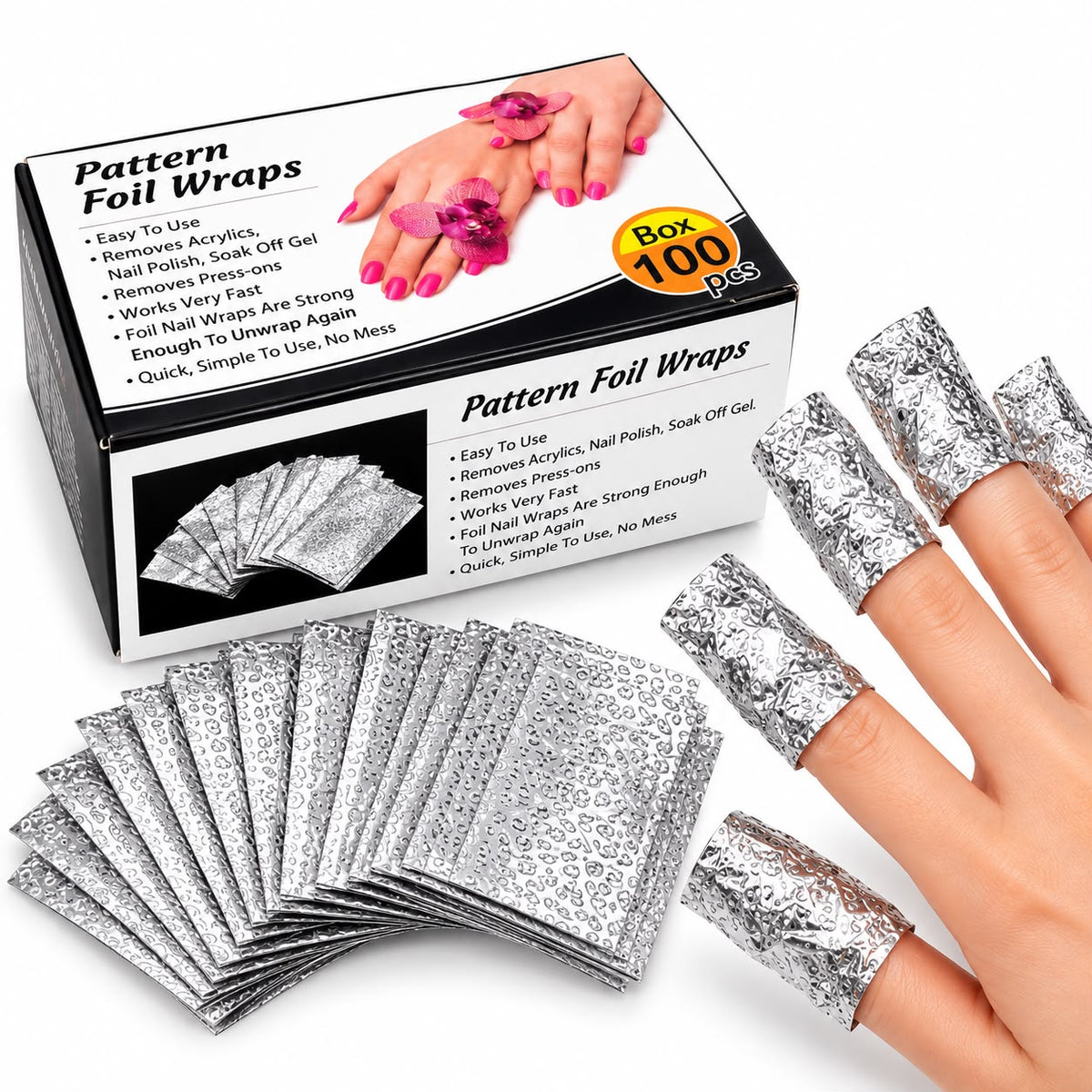
- BNC Remover Pads (Remover Wraps) or cotton pads and aluminium foil
- Orange wood stick or cuticle pusher
- Nail oil for aftercare
The methods compared
Step 1: Preparation
- Shorten: Shorten long gel nails with nail clippers or a file to a manageable length. That way you have less material to remove.
- Break the seal: File the shiny surface until it's matte. With soak-off products, the acetone can only penetrate properly once this is done.
Step 2a: Filing off classic gel
- Use the 100 or 180 grit side to file evenly over the whole nail and work your way down layer by layer.
- Wipe off the dust in between so you can see how much gel is left.
- Leave a very thin layer of gel on the natural nail. It will grow out or serve as the base for your next set. This way you avoid filing into the natural nail.
- Use little pressure and watch out for heat. If it gets warm, take a short break.
Step 2b: Soaking off shellac and soak-off gel
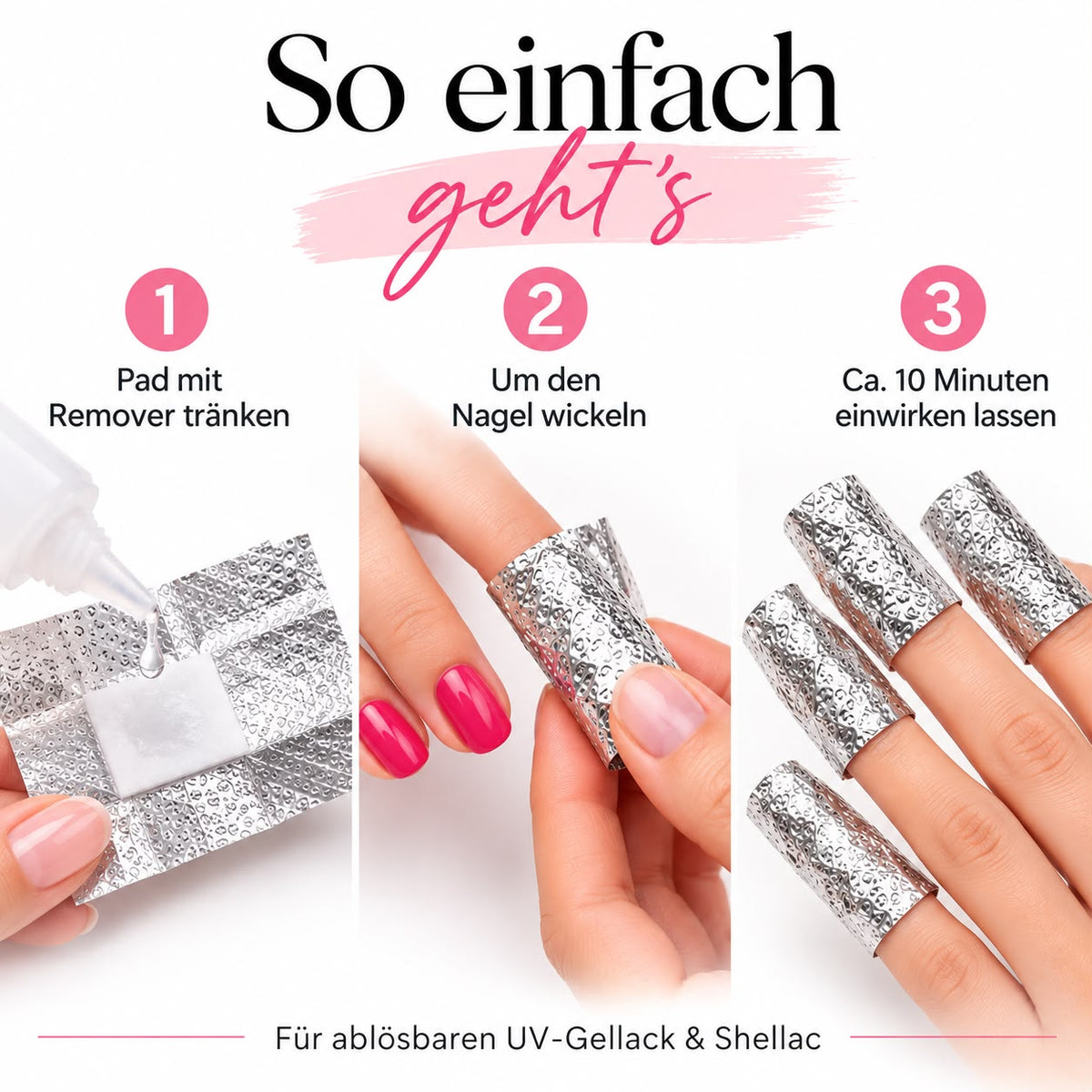
- Soak a pad in acetone or remover and place it on the buffed nail.
- Wrap the finger in aluminium foil or use ready-made remover wraps.
- Leave it for about 10–15 minutes. Warmth (e.g. a towel over your hands) speeds up the process.
- Remove the foil and gently push the softened material off the nail with an orange wood stick. If it doesn't come off, let it soak again instead of scraping.
- Remove any remaining traces with a fine buffer.
You'll find more about UV nail polish in What is shellac?
💡 Pro tip for salons
Removal is much faster with an electric e-file. According to the product description, a BNC Ceramic Bit Cylinder Medium is suitable for removing gel and acrylic and generates hardly any heat. Always work with a light touch and leave a thin layer on here too. Our article Nail drill bits explained shows which bit is right for which job.
Step 3: Aftercare for your natural nails
- Restore moisture: Acetone is strongly degreasing. Massage nail oil in straight afterwards and regularly over the following days, e.g. BNC Scented Nail Oil Almond Clear.
- Apply hand cream: A rich hand cream protects the skin around the nail.
- Keep them short: Freshly exposed natural nails are often thin. Short nails break less often.
- Be gentle with cuticles: Don't cut them – care for them with oil and push them back gently.
If your nails are thin and brittle afterwards, the tips in our article Brittle nails – causes and what helps will help.
Mistakes to avoid
- Peeling or picking off: This tears off the top layers of the natural nail as well.
- Prying with metal tools: Damages the nail plate and cuticle.
- Files that are too coarse on the natural nail: Always use fine grits on the natural nail.
- Hours-long acetone baths: Unnecessarily dry out skin and nails.
FAQ: Removing gel nails
Can I remove gel nails with acetone?
Only if they are soak-off gel, gel polish or shellac. Classic builder and colour gel is filed off.
Is regular nail polish remover enough?
For shellac and soak-off products you need acetone or a special soak-off remover. Acetone-free nail polish remover doesn't reliably dissolve these materials.
How long should I take a break after removal?
A break isn't strictly necessary if the natural nail is intact. If it's thin or damaged, give it a few weeks of intensive care with nail oil.
Why should I leave a thin layer of gel on?
So you don't accidentally file into the natural nail. The thin layer grows out or is reworked during your next set.
🔎 More help with gel problems
You'll find all the typical problems with gel and shellac – with short answers and matching products – in our overview Gel problems & solutions. Not sure what a term means? Take a look at the Nail design glossary A–Z.
Everything for gentle removal
Files, removers, acetone and care oils: in the BNC online shop you'll find nail cosmetics & nail salon supplies in professional quality – for home and for the salon.
Browse the shop




Leave a comment
This site is protected by hCaptcha and the hCaptcha Privacy Policy and Terms of Service apply.